
Every parent has been there. The party is over, your child is exhausted and glitter-covered, and the bathroom sink becomes the scene of a minor battle. Good news: face paint removal does not have to be a struggle, and it definitely should not hurt.
After thousands of events nationwide, we have learned a lot about face paint removal, and the most important thing we can tell you is that the method matters as much as the product you use.
The wrong approach leaves skin red and irritated. The right approach takes two minutes and leaves skin feeling fine. This guide covers everything from everyday water-based designs to stubborn glitter and waterproof formulas, so you know exactly what to do when you get home from your next event.

Why Paint Type Changes Everything
Not all face paint comes off the same way, and that is the piece of advice most online guides skip entirely. At professional events, we work with several different types of paint, and knowing which one was used on your child gives you a real head start.
Water-based face paint is the most common type used by professional face painters. These paints are designed to come off easily with warm water and a gentle cleanser. Professional-grade brands like Snazaroo and Mehron fall into this category, and they are the friendliest option for children’s skin.
Alcohol-based and waterproof paints are less common at children’s events but do show up at festivals or for body art where durability matters. These formulas need an oil-based remover rather than water, and using plain water on them usually just smears the pigment around.
If you hired a professional and are not sure what type of paint was used, ask. A good face painter always knows their products and should be able to tell you exactly how to remove what they applied.
How to Remove Water-Based Face Paint Without Scrubbing
This is the easiest scenario. Here is what works reliably:
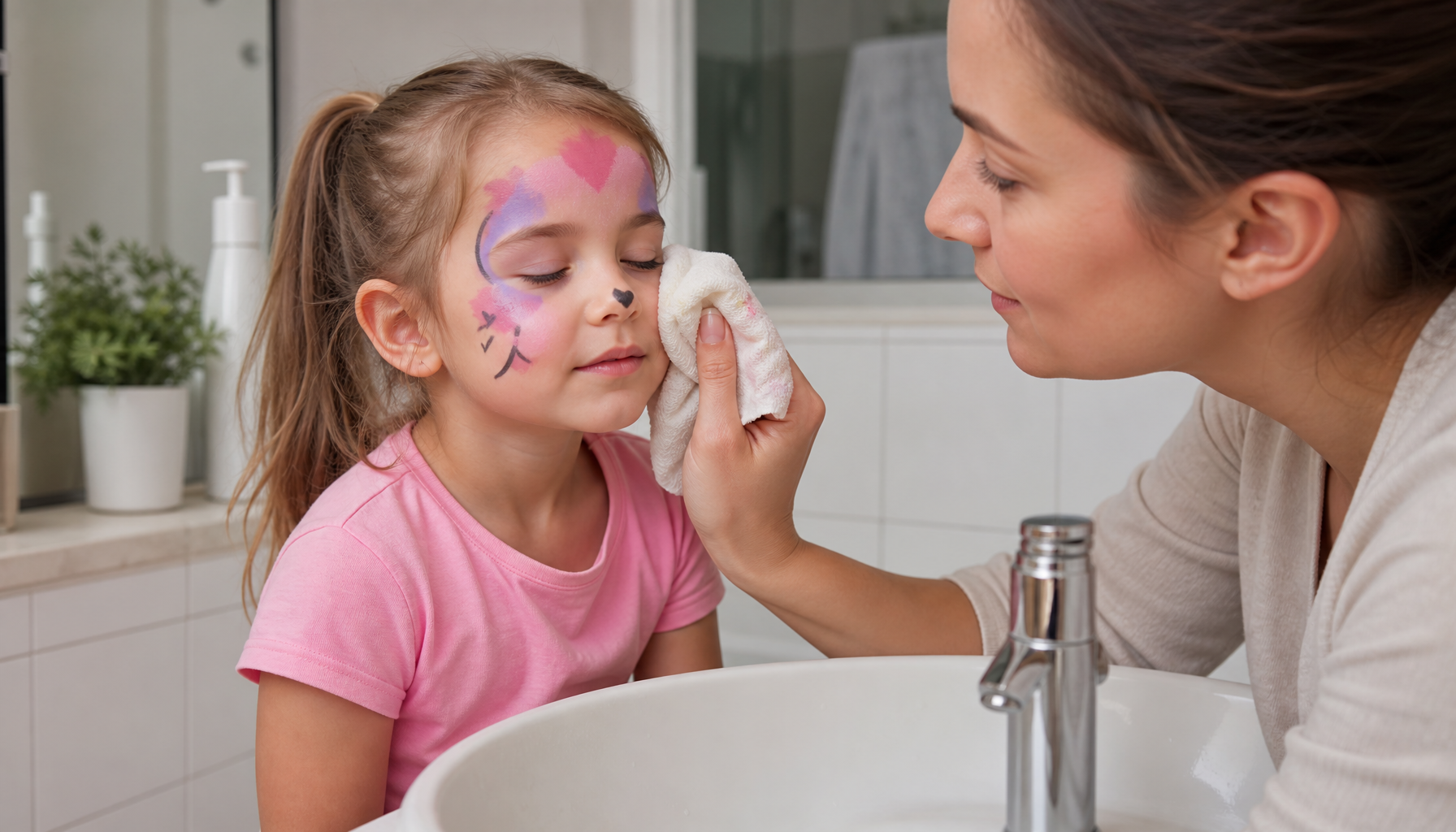
- Wet a soft washcloth or cotton pad with warm (not hot) water.
- Apply a small amount of mild baby shampoo or gentle facial cleanser.
- Work in slow, circular motions outward from the center of the design.
- Rinse with warm water and pat dry.
Avoid scrubbing hard. The paint will loosen with moisture and gentle movement. Scrubbing just irritates the skin without speeding up the process.
How to Remove Waterproof or Alcohol-Based Paint at Home
Oil breaks down the binders in waterproof formulas, which is why oil-based removers outperform soap and water on these products.
Coconut oil, baby oil, or a dedicated gentle makeup remover designed for waterproof products all work well. Apply a small amount to a cotton pad, hold it against the painted area for about 20 seconds, then wipe gently. Follow up with a mild cleanser to remove the oil residue.
Safe Face Paint Removal for Sensitive Skin
Children under 3, and anyone with known skin sensitivities, need a little extra care. The same is true for adults with very dry or mature skin (an extra oil step goes a long way toward avoiding that tight, stripped feeling afterward). The approach is not dramatically different from standard removal, but a few small adjustments make a real difference.
Stick with fragrance-free, dye-free products. Micellar water is an excellent option here because it lifts pigment without any rubbing at all. Pour some onto a cotton pad, press it against the painted area, wait 10 to 15 seconds, and wipe away gently. Repeat as needed.
Around the eyes and lips, avoid getting any cleanser into the eye itself. Use a cotton swab for precision near the lash line, and work slowly. We always tell parents to do eye areas last, when the child is calm and cooperative rather than impatient.
For children with documented skin conditions or allergies, we recommend reading our full guide on face painting for sensitive skin before the event so you can communicate specific needs to your face painter in advance.

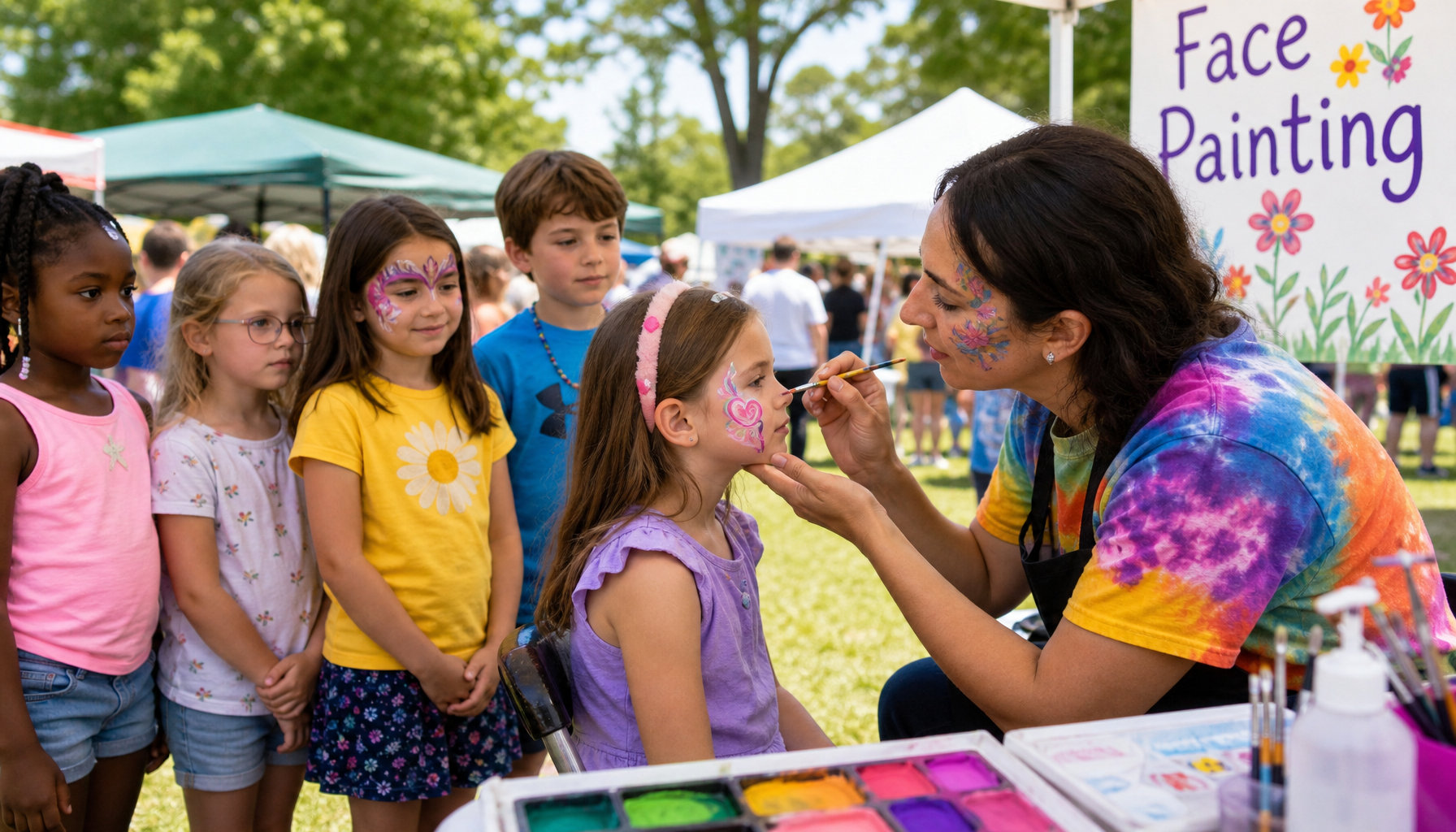
The Glitter Problem (And How to Actually Solve It)
Glitter is the wildcard of face painting. Children love it. Parents have complicated feelings about it. And standard removal methods often just move it around rather than removing it.
The trick is to think about glitter separately from the paint underneath. Glitter sits on top of a cosmetic-grade adhesive or gel, and that adhesive responds well to oil-based removal.
Start with baby oil or coconut oil applied directly to the glittered area. Let it sit for 30 seconds, then use a damp cloth to wipe away. The glitter will cling to the oil and come off with it rather than flaking everywhere. Do this over a sink or a towel you do not mind getting sparkly.
After the glitter is gone, wash the area normally with a gentle cleanser. A second pass with micellar water on a cotton pad usually catches any remaining glitter hiding near eyebrows or hairlines.
One thing we remind families: never use tape or a dry cloth to pull glitter off dry skin. That method works on surfaces but is too rough for facial skin and can cause micro-abrasions.
Remove Face Paint Without Irritation: A Troubleshooting Guide for Common Situations
Even with the right method, sometimes paint sticks around longer than expected. Here is what to do in common problem situations.
Paint looks faded but will not fully come off. This usually means the paint has settled into fine lines or texture on the skin. Apply a small amount of coconut oil and let it sit for a full minute before wiping. The extra dwell time helps break down the remaining pigment. Follow with a warm washcloth.
Skin is turning red during removal. Stop and reassess. Redness usually means too much friction. Switch to micellar water on a cotton pad and use zero pressure. Let the product do the work instead of your hand.
Paint got into the hairline. This is common with full-face designs. A small amount of conditioner or baby oil worked through the hairline with fingertips loosens paint without pulling hair. Rinse thoroughly in the shower.
Mild staining remains after washing. Some highly pigmented colors (deep reds, blacks) can leave a faint tint behind, especially on very fair skin. This is temporary and will fade within a few hours. A gentle exfoliating cleanser used the next morning usually clears it completely.
If you are seeing a reaction beyond normal redness, or if your child has reported discomfort during the event itself, visit our face paint safety guide for guidance on identifying reactions and when to consult a healthcare provider.
What We Tell Every Client Before They Leave
After working events from birthday parties to corporate festivals, we have settled on a short list of reminders we give to every parent before the day wraps up.
Remove paint the same day. Water-based paints left overnight can dry and cling more stubbornly to skin. Removing it while it is still relatively fresh is always easier.
Do not use harsh household products. Rubbing alcohol, nail polish remover, and bleach-based cleaners are not appropriate for facial skin, especially children’s. They strip the skin barrier and can cause real irritation. Stick with cosmetic-grade removers.
Hypoallergenic face paint from a reputable professional is designed to come off cleanly, but even the best paint removes more easily with a little patience and the right product.
Ask your face painter what they used. Professional face painters worth hiring should always be able to tell you the brand and type of paint they applied and give you removal guidance on the spot. If that information was not offered, it is always fine to ask.
Curious about what products we use at our events? We cover our product standards and screening process in our face paint safety overview, including how we approach hypoallergenic options for children with known sensitivities.
Face Paint Removal Starts With Paint Selection
The easiest face paint to remove is the kind chosen carefully in the first place. Professional-grade, water-based paints formulated for the face come off more reliably than craft or theatrical paints not designed for skin contact.
When you book a professional face painter, part of what you are paying for is this kind of care in product selection. We only work with paints that we would use on our own children, and easy, irritation-free removal is part of that standard.
What to Do Tonight
Safe face paint removal comes down to three things: knowing what type of paint was used, choosing the right removal method, and taking your time. For most children after most events, warm water and a gentle cleanser is genuinely all you need. For glitter, waterproof paint, or very sensitive skin, a small amount of baby oil or micellar water makes the whole process smooth and painless.
We put this face paint removal guide together because the end of a great event should feel just as easy as the event itself.
The paint should come off without a fight, and your child’s skin should look exactly the same as it did before the party started.
Planning an event with face painting? Our professional face painters use only high-quality, easily removable paints and we provide removal instructions to every client before they head home. Contact us to make your next event safe, fun, and stress-free.